How Can I Consistently Create Conditions That Support Healthy Bone Remodelling?
Introduction: Looking Beyond Bone Density
When most people think about osteoporosis, they think about bone density. They think about DEXA scans, T-scores and fracture risk. Those measurements are incredibly important, but they only tell part of the story. A DEXA scan gives us a snapshot of where our bones are today. Bone turnover markers, on the other hand, may help us understand what our bones are doing right now. Are we building bone? Are we breaking down bone? Or are we somewhere in between?
Two of the most commonly used bone turnover markers are CTX and P1NP. Although these tests are increasingly used by osteoporosis specialists and researchers, many people receive the results with very little explanation about what they actually mean. As someone who has spent the last few years navigating osteoporosis, reading the literature and trying to understand my own results, I became fascinated by a simple question: can we influence these markers naturally through nutrition, exercise and lifestyle?
Before we answer that question, it is helpful to understand what these markers actually measure.
Introducing BonePilot
Your Bone Health Coach
One of the challenges many people face is making sense of their bone health data. DEXA scans, REMS scans, fracture history, blood tests, medications and bone turnover markers are often stored in different places and explained using highly technical language.
BonePilot was created to help bridge that gap.
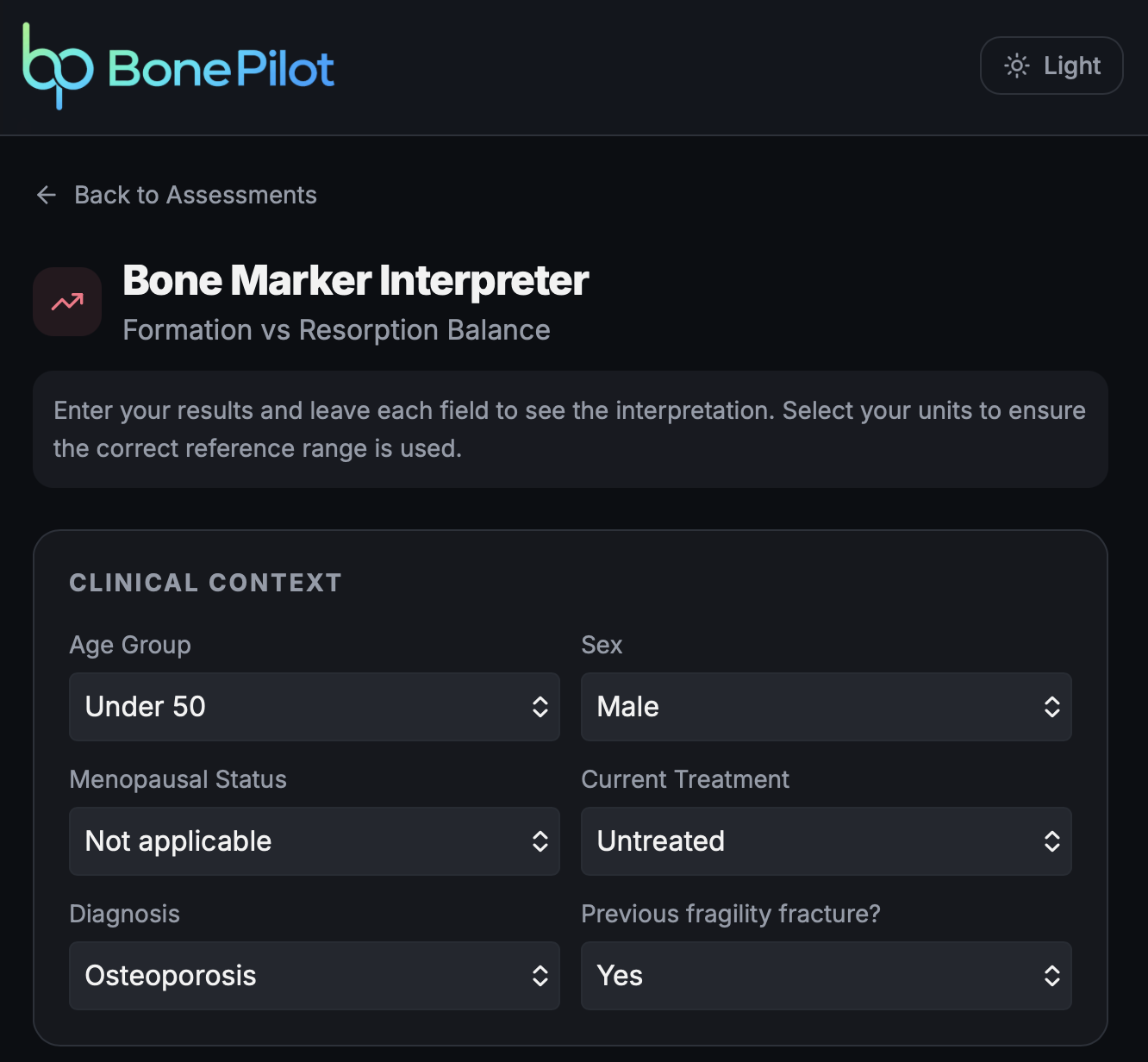
BonePilot allows users to record DEXA scans, REMS scans, fracture history, medications, supplements and bone turnover markers in one place. The goal is not diagnosis. The goal is understanding. The platform helps users organise their data, identify trends over time and prepare more informed conversations with healthcare professionals.
As part of the assessment process, BonePilot includes tools that help visualise the relationship between CTX and P1NP and illustrate the relative balance between bone formation and bone resorption.
BonePilot bone marker interpreter
Understanding what these markers represent is the first step.
Understanding CTX: The Bone Breakdown Marker
BonePilot CTX interpreter
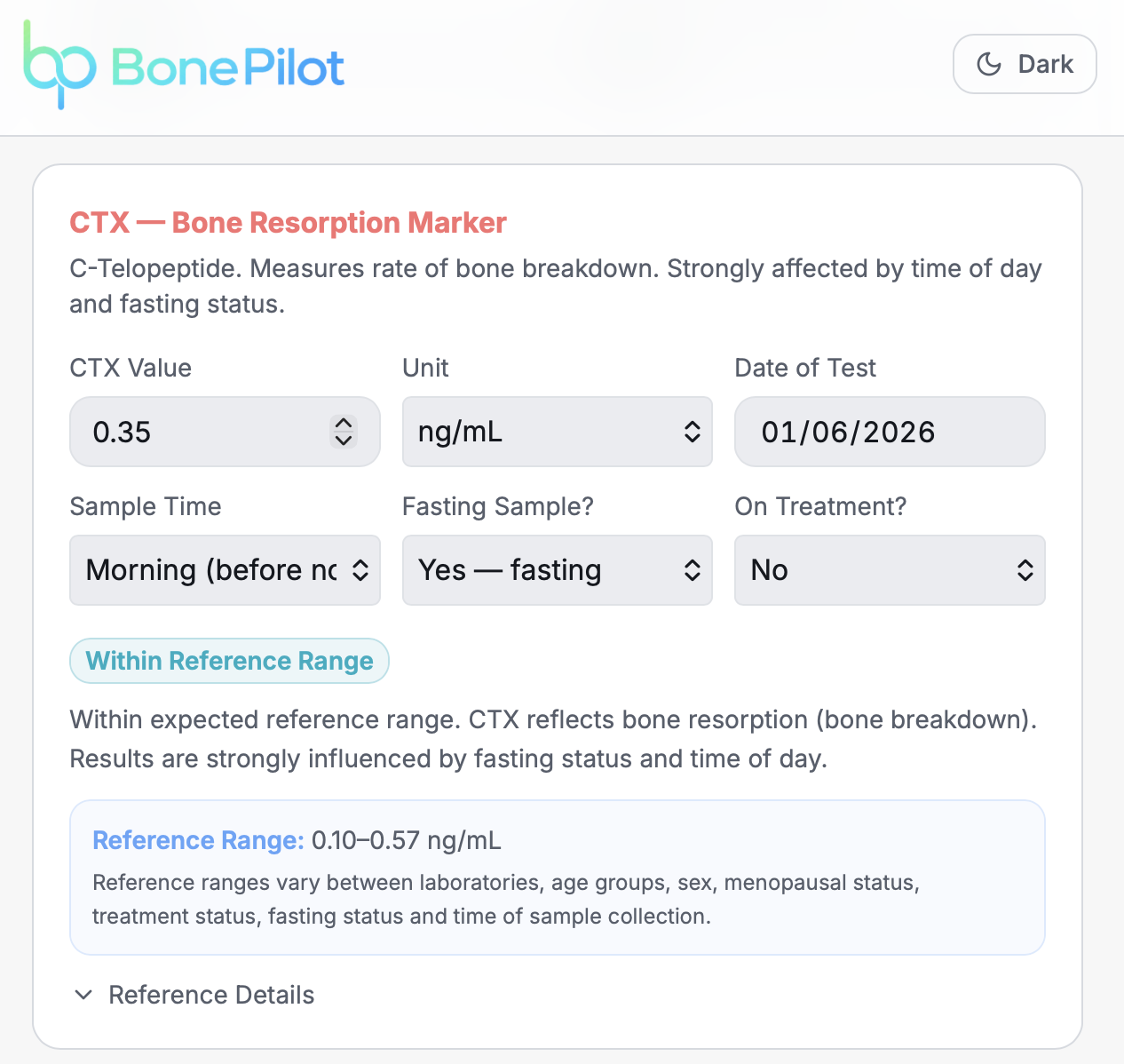
CTX, or C-terminal Telopeptide of Type I Collagen, is a marker of bone resorption. In simple terms, it reflects the activity of osteoclasts, the cells responsible for breaking down old bone. Higher CTX values generally indicate higher rates of bone breakdown. CTX is also highly sensitive to timing, meals and circadian rhythms, which is why it is usually recommended that blood samples are taken fasting and first thing in the morning.
Understanding P1NP: The Bone Formation Marker
BonePilot P1NP interpreter
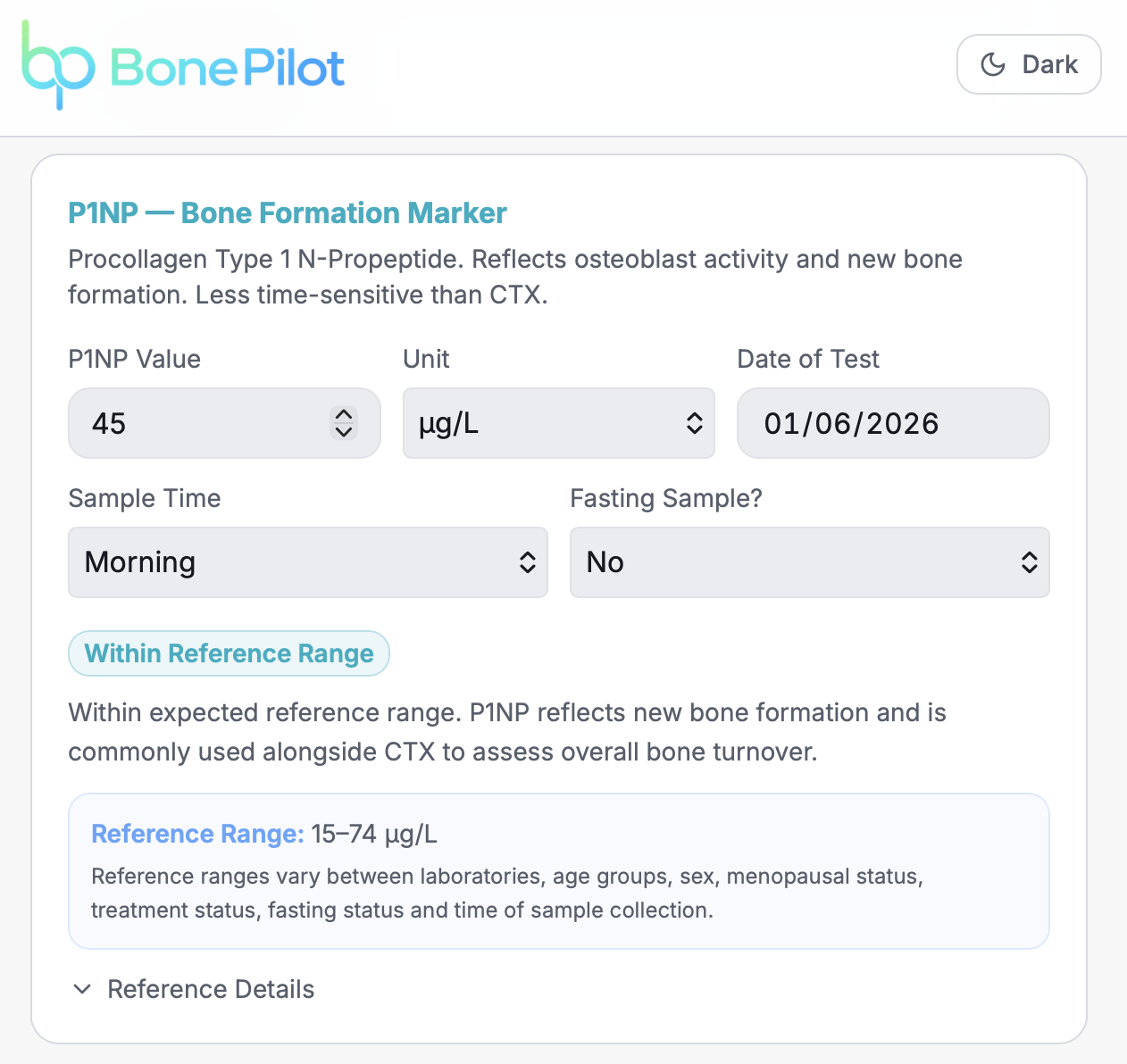
P1NP, or Procollagen Type I N-Terminal Propeptide, is a marker of bone formation. It reflects the activity of osteoblasts, the cells responsible for building new bone. Higher P1NP values generally indicate increased bone formation. Unlike CTX, P1NP tends to be more stable throughout the day and less influenced by food intake. Together, these two markers provide a useful window into the balance between bone formation and bone resorption.
Why Bone Turnover Matters
Bone is far more dynamic than many people realise. Every day, old bone is removed and replaced with new bone through a process known as remodelling. In healthy bone metabolism these processes remain relatively balanced, allowing the skeleton to continuously repair and renew itself. Problems can arise when bone breakdown consistently outpaces bone formation over time. This is one reason why bone turnover markers have become increasingly popular among clinicians interested in understanding bone health beyond a simple DEXA scan.
Why Bone Markers Need Context
Importantly, bone turnover markers do not diagnose osteoporosis on their own. A CTX result cannot tell you whether you have osteoporosis. A P1NP result cannot tell you whether you will fracture a bone. These markers are best viewed as additional pieces of information that can complement DEXA scans, fracture history, blood tests and clinical assessment.
Making Sense of Your Results
One of the challenges many people face is making sense of these results. A CTX value on its own can be difficult to interpret. The same is true for P1NP.
BonePilotincludes an educational tool that visualises the relationship between CTX and P1NP and provides a simple graphical representation of the relative balance between bone formation and bone resorption. The intention is not to diagnose bone gain or bone loss, but to help users better understand their results and identify trends over time.
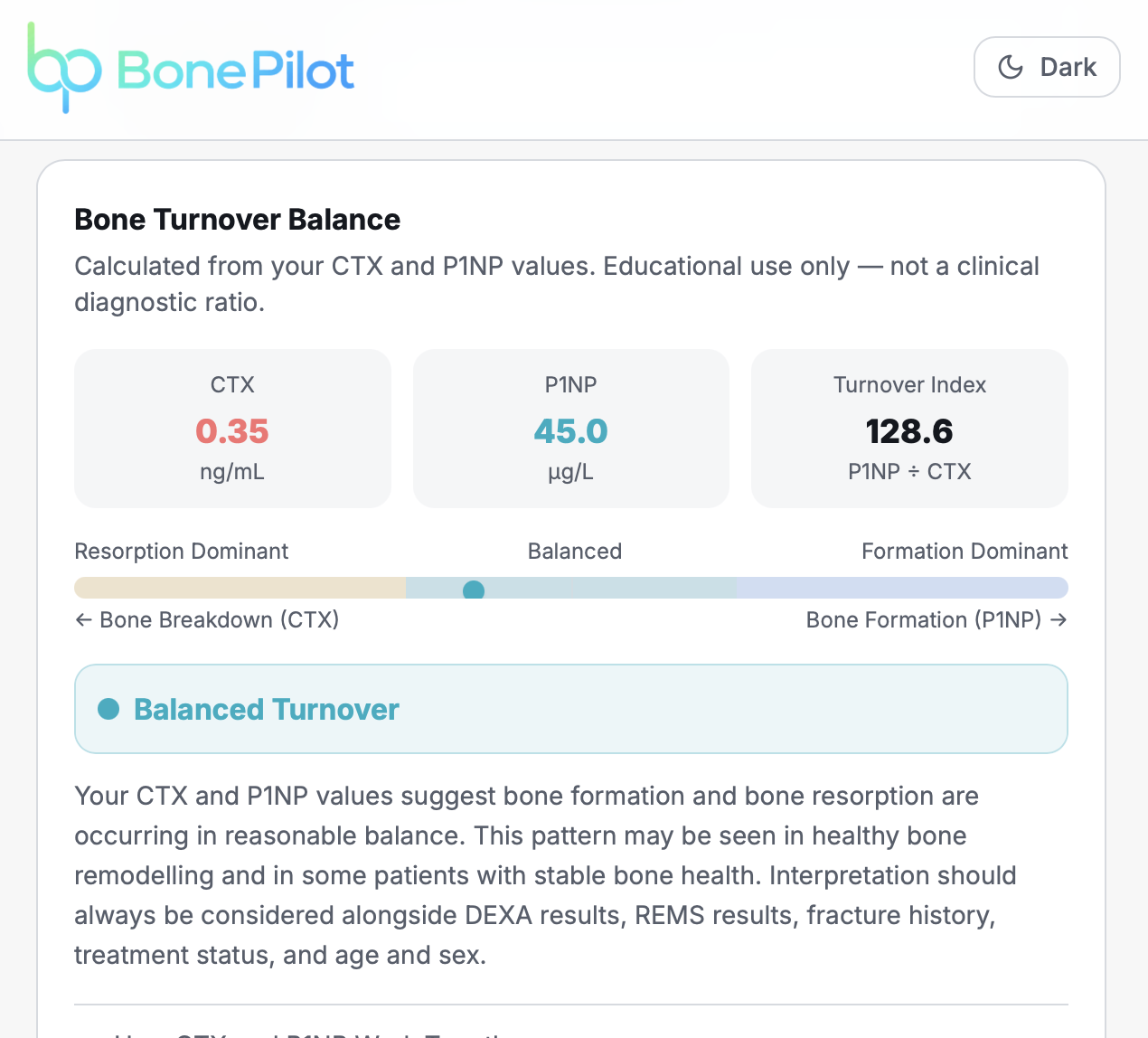
BonePilot CTX / P1NP Visualisation
The more informed we are, the better questions we can ask and the more productive our conversations with healthcare professionals become.
What Does the Research Actually Tell Us?
One of the most important lessons from the scientific literature is that there is currently no universally accepted CTX/P1NP ratio that can definitively diagnose bone gain or bone loss. That may feel disappointing at first, especially for those of us who like numbers and clear answers. However, it is also an important reminder that bone biology is complex. While researchers have become increasingly interested in bone turnover markers, they continue to emphasise that these tests should be interpreted within a much broader clinical context.
The good news is that several systematic reviews, meta-analyses and randomised controlled trials provide useful clues about the factors that appear to support healthy bone remodelling.
Resistance Training: The Strongest Evidence for Supporting Bone Formation
One of the strongest themes to emerge from the literature is the importance of resistance training. A 2024 systematic review and meta-analysis examining resistance exercise and bone turnover markers found that longer-term resistance training tends to increase bone formation markers and reduce bone resorption markers. The effects were not dramatic overnight. Instead, they reflected the cumulative effect of repeated mechanical loading over weeks and months.
This aligns with what we understand about bone adaptation. Bones respond to the demands placed upon them, and consistent loading appears to matter far more than occasional intense exercise.
Can Running Improve CTX and P1NP?
Another interesting finding comes from studies examining prolonged endurance exercise. An individual participant meta-analysis investigating running and bone turnover markers found very little change in CTX and P1NP following a single exercise session. This is important because it reminds us not to overinterpret individual test results. One workout is unlikely to transform your bone markers. Meaningful changes appear to occur through repeated behaviours performed consistently over time.
Calcium Timing and Bone Turnover
Nutrition also appears to play an important role. Several studies have investigated the effect of calcium intake before exercise and found that consuming calcium prior to training may reduce the temporary increase in CTX that can occur following exercise. Researchers believe this may be related to the body's regulation of calcium balance during physical activity.
While this does not mean everyone should immediately start taking calcium supplements, it does suggest that nutrient timing may influence short-term bone metabolism and deserves further investigation.
Protein: The Forgotten Building Block of Bone
Protein remains another fundamental component of the conversation. Bone is not simply calcium. Approximately half of bone volume consists of protein-rich collagen. Without adequate protein intake, it becomes difficult to build and maintain healthy bone tissue. Research consistently shows that adequate protein intake supports musculoskeletal health, particularly when calcium intake is also sufficient.
For many people, increasing protein intake may be one of the simplest and most effective nutritional strategies available.
Blueberries, Curcumin and Phytonutrients: What Does the Evidence Say?
Some of the most intriguing research has focused on phytonutrients such as anthocyanins from blueberries and curcumin from turmeric. Blueberries contain powerful plant compounds responsible for their deep blue colour, while turmeric contains curcumin, a molecule that has attracted considerable scientific interest for its anti-inflammatory properties.
Laboratory studies and animal research suggest that both compounds may influence inflammatory and oxidative pathways involved in bone metabolism. While the human evidence remains limited and we cannot confidently say that eating blueberries or turmeric will directly improve CTX or P1NP, these foods remain highly nutritious and may contribute to a dietary pattern that supports long-term skeletal health.
The Bigger Picture: Bone Health Is Never Just One Thing
Perhaps the most important lesson from the literature is that healthy bone remodelling does not appear to respond to any single intervention. There is no magic supplement, no miracle food and no perfect exercise programme. Instead, bone health seems to emerge from the interaction of many factors working together over time, including:
Progressive resistance training
Impact exercise where appropriate and medically safe
Adequate protein intake
Sufficient calcium intake
Maintaining vitamin D sufficiency
A nutrient-dense whole-food diet
Regular consumption of fruits and vegetables
Maintaining a healthy body composition
Good quality sleep and recovery
Avoiding smoking
Limiting excessive alcohol intake
None of these factors is likely to transform your bone health overnight. Together, however, they may help create an environment in which healthy bone remodelling is more likely to occur.
Evidence-Informed Ways to Support Healthy Bone Remodelling
Based on the current evidence, the strongest strategies appear to be:
Prioritise progressive resistance training.
Include impact exercise where appropriate and medically safe.
Ensure adequate daily protein intake.
Maintain sufficient calcium intake through food and, where appropriate, supplementation.
Optimise vitamin D status.
Build meals around whole foods, fruits and vegetables.
Consider nutrient timing around exercise.
Focus on consistency rather than perfection.
Track trends over time rather than obsessing over individual results.
Use tools such as Bone Pilot to help organise your data and support informed discussions with healthcare professionals.
None of these interventions should be viewed in isolation. The research consistently suggests that the greatest benefits arise when several of these factors are combined into a long-term, sustainable approach to bone health.
A Better Question
When people first discover CTX and P1NP, it is natural to ask how they can increase one and decrease the other. After spending time reading the research, I have come to think that a better question is this:
How can I consistently create conditions that support healthy bone remodelling?
The answer is less exciting than a miracle supplement or a quick fix, but it is probably more useful. The evidence suggests that healthy bone remodelling is influenced by the cumulative effect of thousands of small decisions repeated over months and years. The food we eat. The way we move. The way we recover. The habits we build.
Bone health is not a single event. It is a long-term process. And perhaps the most encouraging message from the research is that many of the factors influencing that process remain within our control.
References
Dolan E, et al. The Influence of Nutrition Intervention on the P1NP and CTX-1 Response to an Acute Exercise Bout: A Systematic Review and Meta-analysis. 2024.
Dolan E, et al. P1NP and β-CTX-1 Responses to a Prolonged Continuous Running Bout in Young Healthy Adult Males: An Individual Participant Data Meta-analysis. 2023.
Bykowska-Derda A, et al. Dietary-Lifestyle Patterns Associated with Bone Turnover Markers in Male Amateur Marathoners. 2022.
Lundy B, et al. The Impact of Acute Calcium Intake on Bone Turnover Markers Following Exercise. 2022.
The Effect of Acute Resistance Exercise on Bone Turnover in Young Adults: A Systematic Review and Meta-analysis. 2024.
International Osteoporosis Foundation (IOF). Bone Turnover Markers in the Management of Osteoporosis.
Eastell R, Szulc P. Use of Bone Turnover Markers in Postmenopausal Osteoporosis. Lancet Diabetes & Endocrinology.
Vasikaran S, et al. International Osteoporosis Foundation and International Federation of Clinical Chemistry Position Statement on Bone Marker Standards in Osteoporosis.
