
Sometimes the Best Way Forward Is to Turn Around
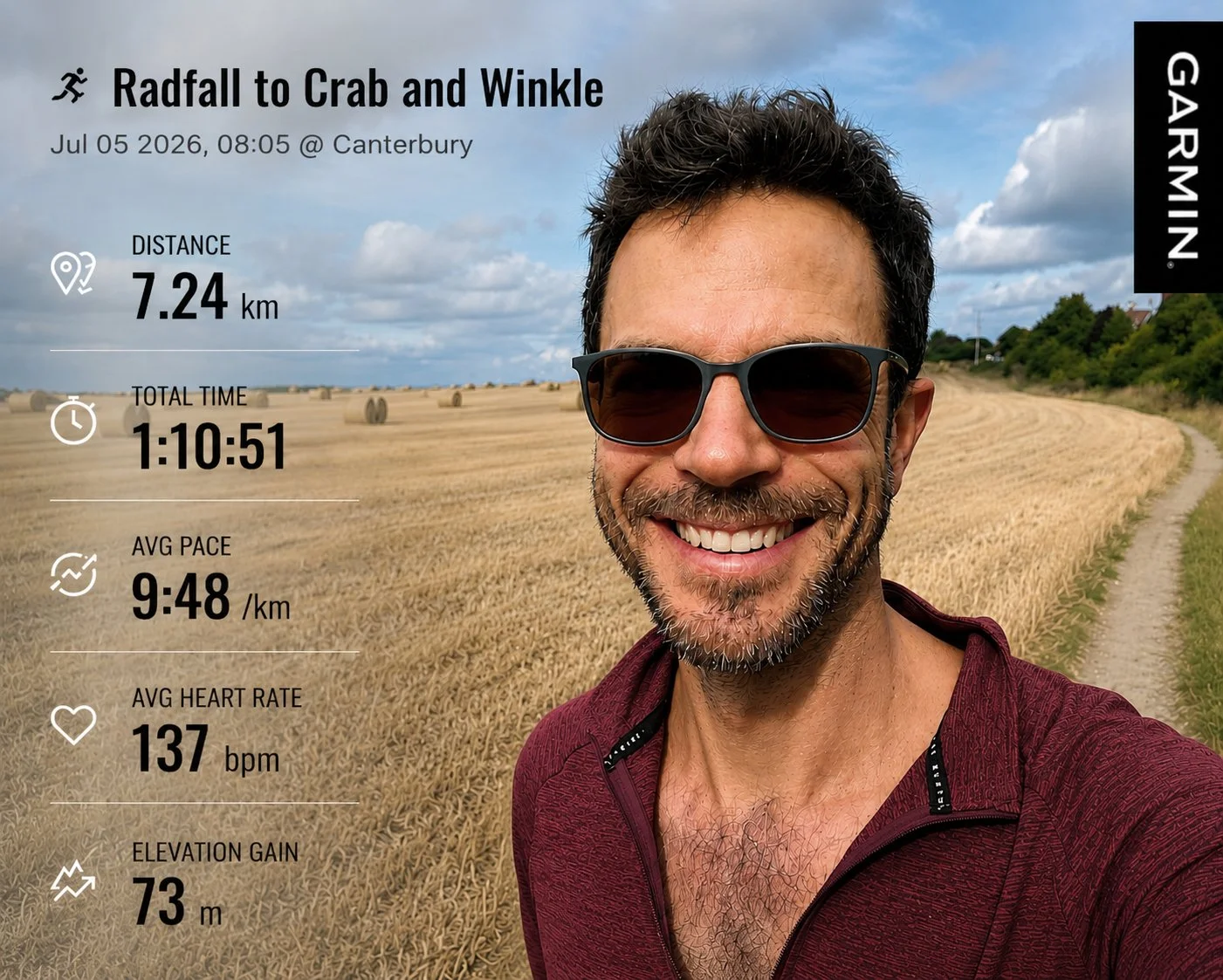
Sometimes the best way forward is simply to change direction.
Not Every Run Starts Feeling Great
I'll be honest—I almost didn't do this run.
It had been an incredibly busy week developing BonePilot. Most of my time had been spent researching scientific papers, refining new educational tools and sitting behind a computer for far longer than I would have liked. By Sunday morning my legs felt heavy, my body wasn't particularly fresh and mentally I wasn't feeling as strong as I usually do.
The previous day I had already postponed my planned long run because I simply didn't feel recovered enough. Rather than forcing it, I decided to listen to my body and give myself another day.
That extra day turned out to be exactly what I needed.
Sometimes Turning Around Is the Better Direction
Instead of running my usual route, I decided to run it in reverse.
At first glance that sounds insignificant, but psychologically it made all the difference.
On my previous Radfall to Crab and Winkle run I hadn't planned the route particularly well. What was intended to be a manageable long run gradually became longer than expected, leaving me feeling overextended and more fatigued than I had intended.
This time I wanted an escape route.
Running the course in reverse meant that if my legs simply weren't there, I could shorten the session without feeling frustrated.
Ironically, changing direction gave me the confidence to complete the entire run.
The Goal Was Never Speed
One of the biggest lessons I've learned over the past few months is that not every run should be about pace.
The objective of this session was simply to build aerobic endurance.
That meant respecting my target heart-rate zone rather than chasing a faster average pace.
There were moments when I felt I was running surprisingly slowly, but every glance at my watch reminded me that my heart rate was exactly where it needed to be.
By slowing down, I was actually training the system I intended to train.
Trusting Garmin Coach
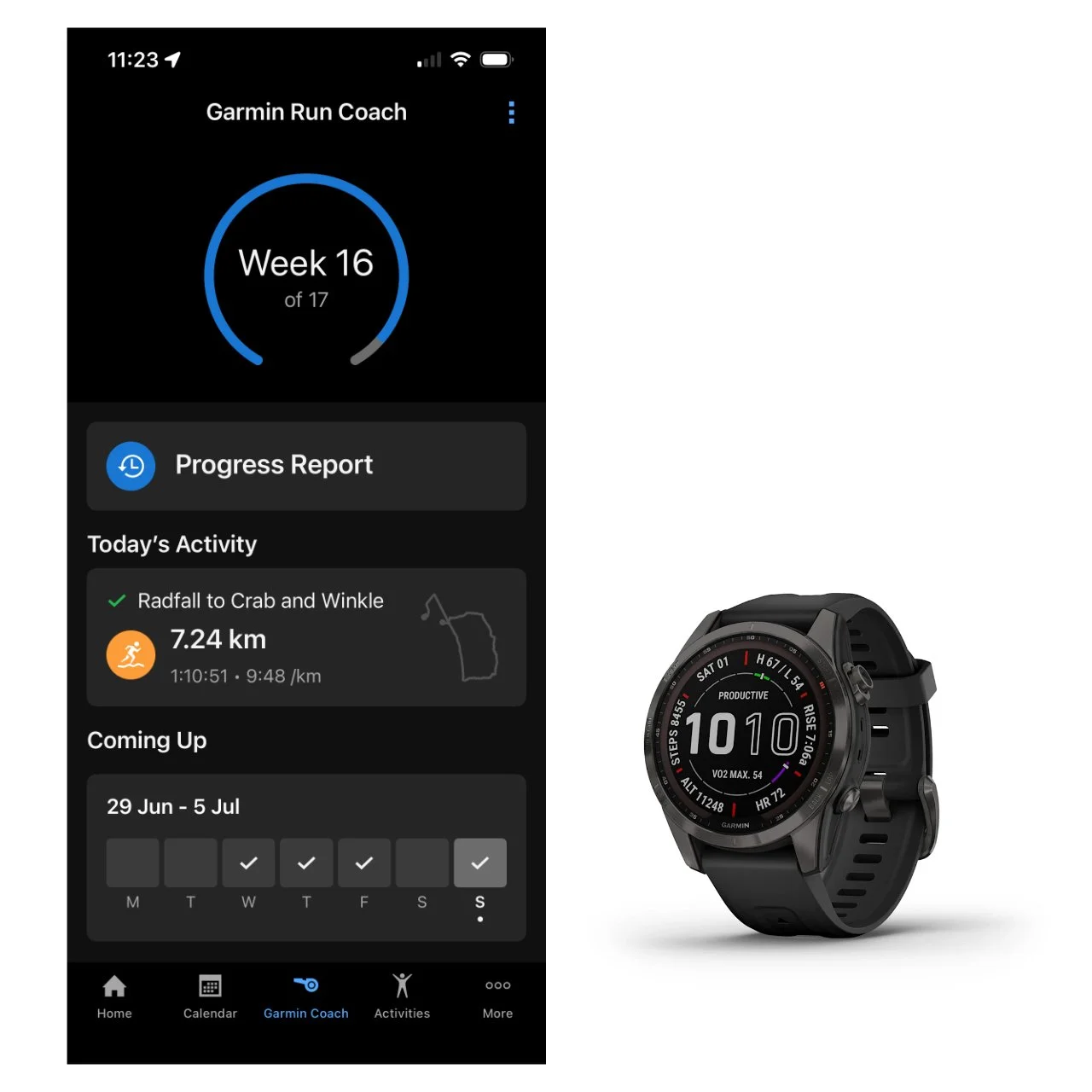
I'm now approaching the final week of Garmin's 17-week Garmin Coach programme, and looking back I'm not sure I would have managed this journey without it.
Having structured workouts, gradual progression and sensible heart-rate targets has removed much of the guesswork from training—something that has been especially important while rebuilding my health after severe osteoporosis, vertebral compression fractures, chronic fatigue and migraines.
Garmin Coach and fēnix® 7S – Sapphire Solar Edition
Whatever it is, the way you tell your story online can make all the difference.
Next week I'll publish a full review of Garmin Coach once I've completed the programme, sharing what I've learned, what surprised me and whether I think it's worth following.
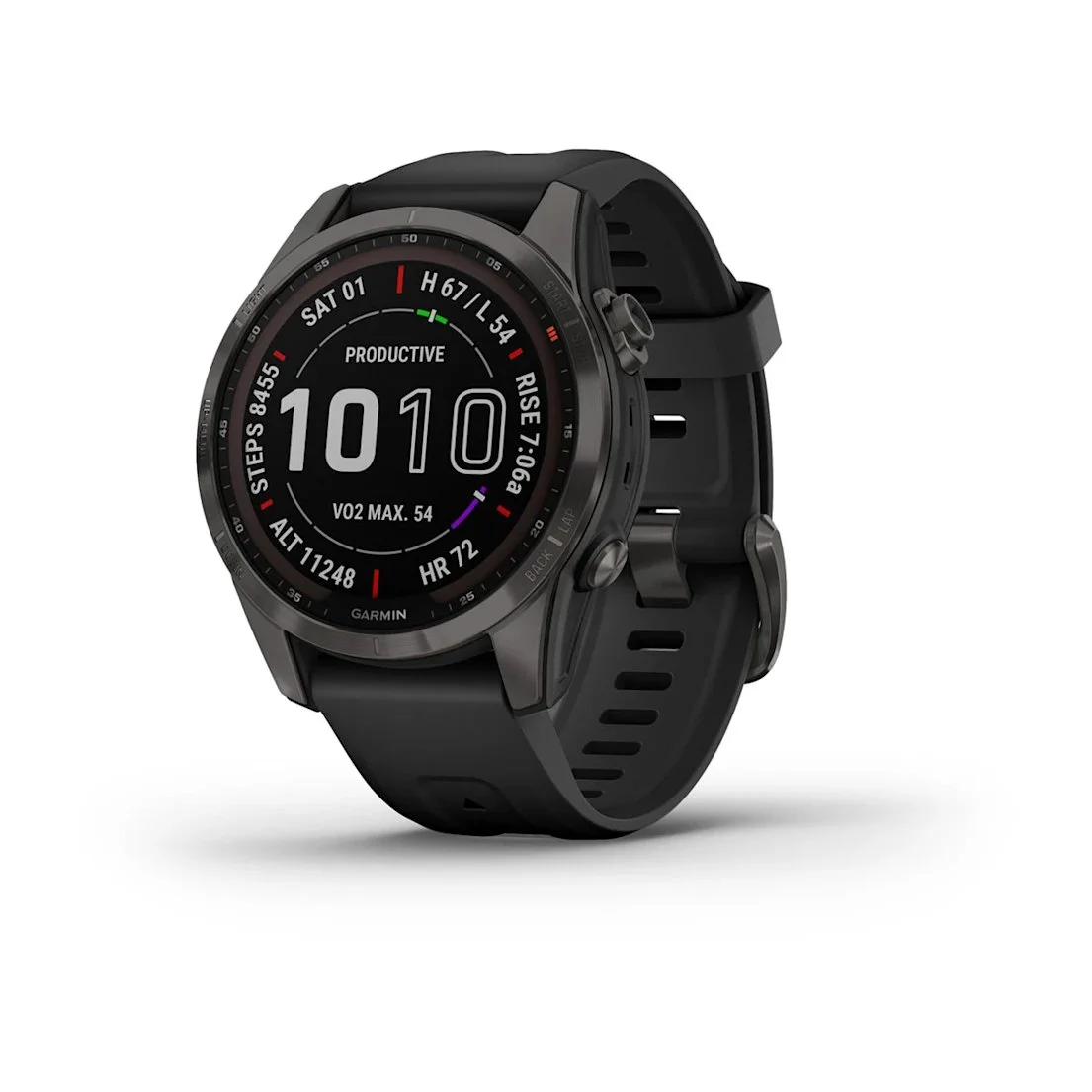
Likewise, my Garmin Fenix 7S Sapphire Solarhas become much more than simply a sports watch. It has become a training partner that helps me make objective decisions based on recovery rather than emotion.
fēnix® 7S – Sapphire Solar Edition
Carbon Grey DLC Titanium with Black Band
Supporting Recovery Before the Run
Recovery actually began before I left the house.
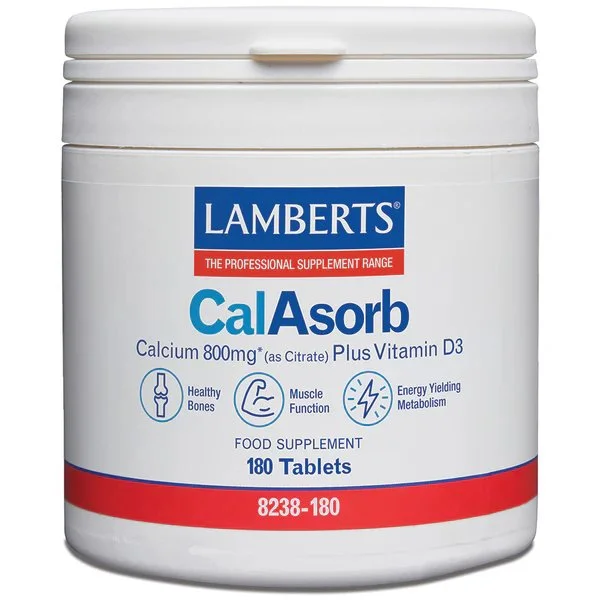
Approximately 30 minutes before setting out I took one tablet of Lamberts CalAsorb®, providing approximately 267 mg of elemental calcium together with 2 µg of vitamin D₃, and drank approximately half a pint of water.
I chose this supplement because it contains calcium citrate, a form of calcium that is well absorbed and can be taken with or without food. It also provides vitamin D₃, which supports normal calcium absorption.
CalAsorb®- Calcium 800mg
My decision was influenced by emerging research suggesting that consuming calcium before prolonged endurance exercise may help maintain calcium homeostasis and attenuate the temporary increase in bone resorption during exercise. Although the evidence is still developing and individual responses vary, it is an area that I continue to follow with great interest.
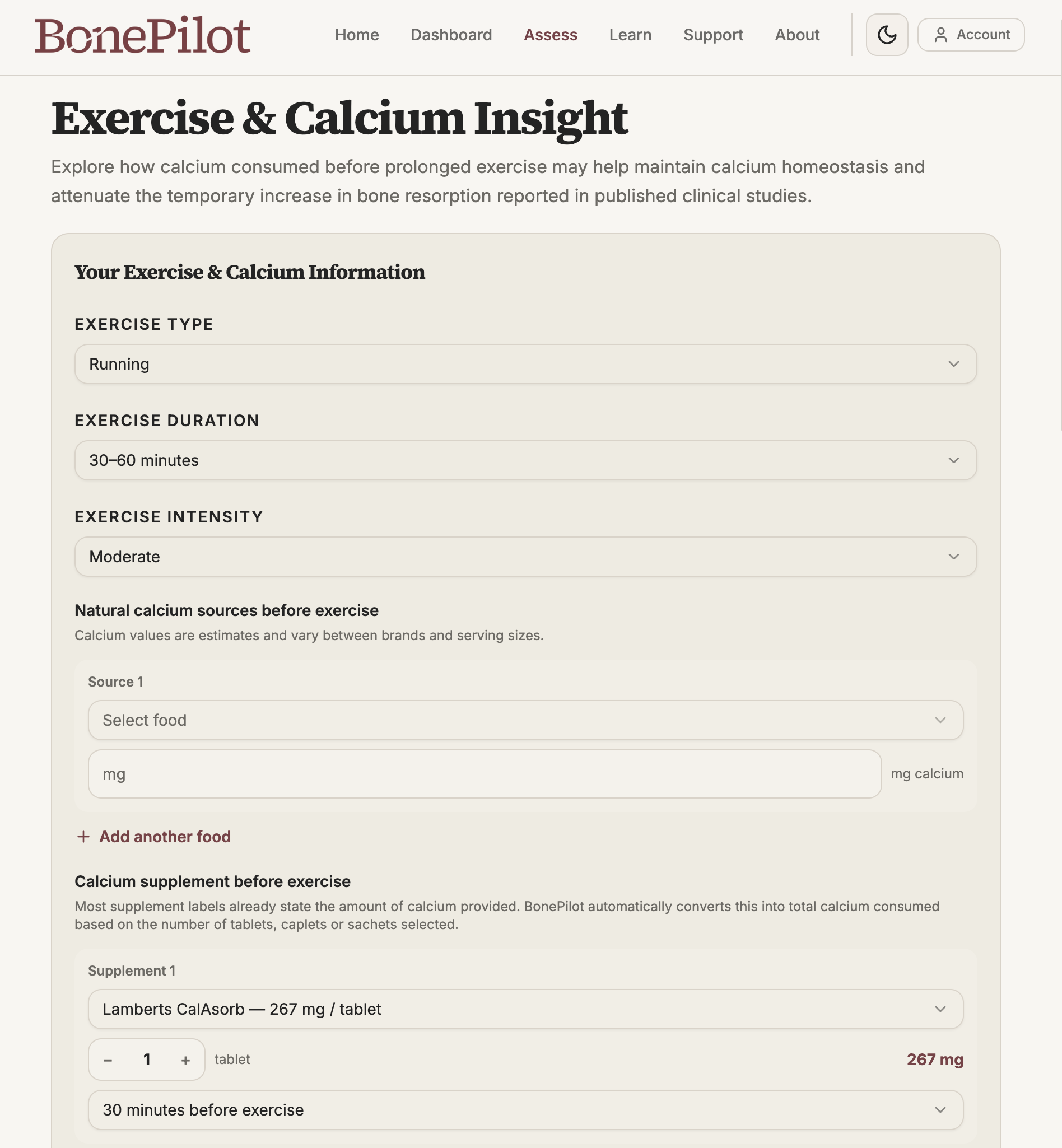
Supplements Assessment
Curious whether your current supplements are appropriate? The BonePilot Supplement Assessment analyses your supplement routine, highlights potential gaps or duplication, and provides evidence-informed educational guidance to support informed discussions with your healthcare professional.
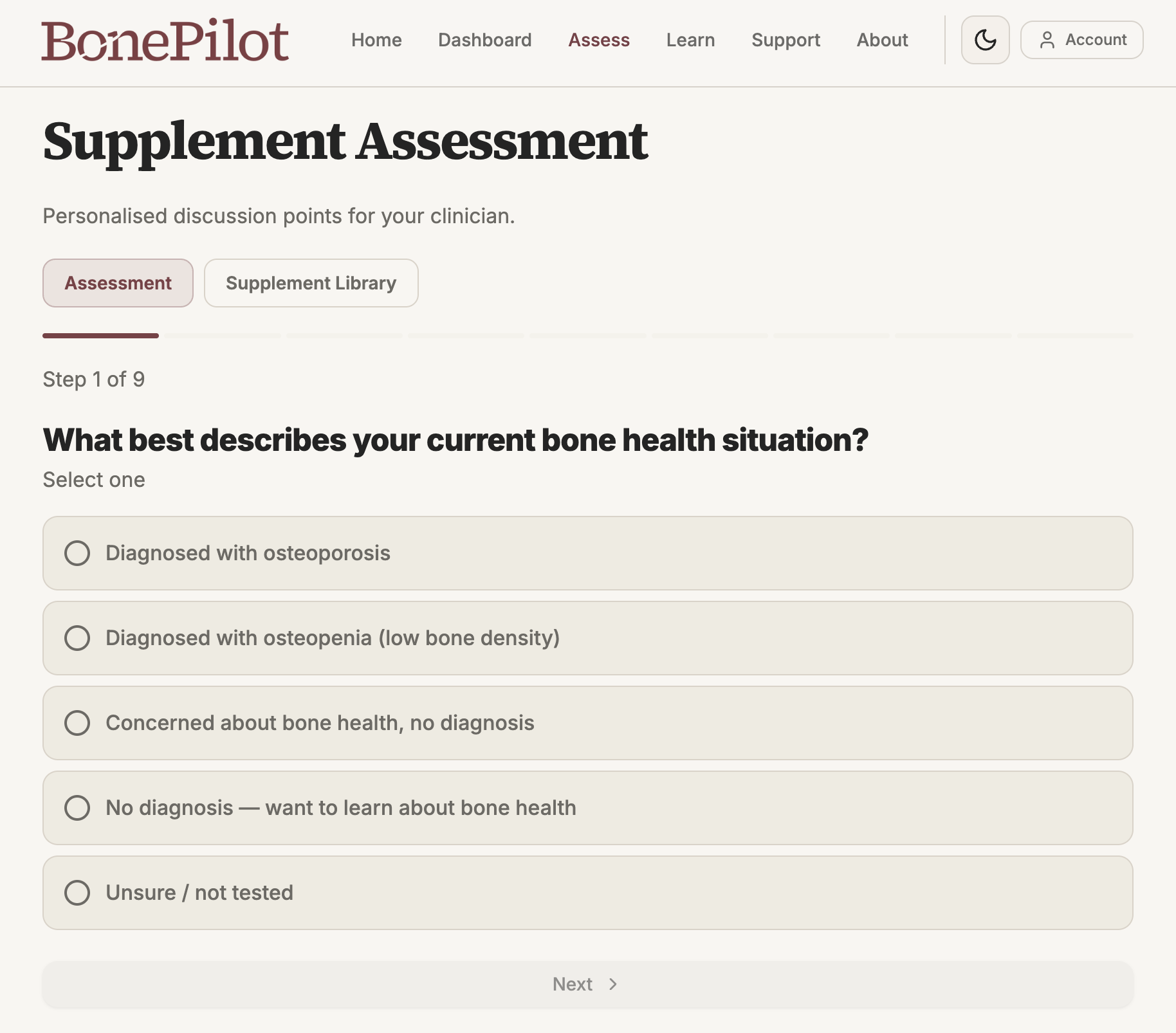
BonePilot - Supplement Assessment
Recovery After the Run
After returning home I drank approximately one pint (570 ml) of freshly brewed GOKO Sencha green tea before preparing breakfast.
My recovery meal consisted of:
Organic Greek-style natural yogurt
Blueberries
Raspberries
Walnuts
Pecans
Ground flaxseed
Organic cacao nibs
Cinnamon
Turmeric
Freshly ground black pepper
Organic honey
Two eggs
Two slices of wholemeal bread with organic butter
I'll be sharing the full recipe, nutritional breakdown and calcium estimate in my next article.
What I Ate for Breakfast After My 7K Run to Support Bone Health
What This Run Taught Me
This run wasn't memorable because it was fast.
It was memorable because I listened.
I adjusted my expectations, respected my recovery and trusted the process rather than my ego.
Changing the route reminded me that sometimes the simplest changes produce the biggest improvements.
The same lesson applies far beyond running.
Whether recovering from osteoporosis, rebuilding fitness or simply navigating everyday life, progress rarely comes from pushing harder all the time.
More often, it comes from making small, thoughtful decisions—and repeating them consistently.
Related BonePilot Tools
Continue learning with BonePilot:
Explore BonePilot
BonePilot
Final Thoughts
As I approach the end of my Garmin Coach programme, I'm beginning to realise that the biggest transformation hasn't been my pace. It's been my mindset. I've learned to trust objective data, respect recovery and appreciate that consistency almost always beats intensity.
That philosophy has shaped not only my running but also the development of BonePilot.
My hope is that by sharing both the successes and the setbacks, others navigating osteoporosis or rebuilding their health will feel encouraged to trust the process, make informed decisions and keep moving forward—one step at a time.
Scientific References
Haakonssen EC, Ross MLR, Knight EJ, Cato LE, Nana A, Wluka AE, Cicuttini FM, Wang BH, Jenkins DG, Burke LM. The Effects of a Calcium-Rich Pre-Exercise Meal on Biomarkers of Calcium Homeostasis in Competitive Female Cyclists: A Randomized Crossover Trial.PLoS ONE. 2015;10(5):e0123302. DOI: https://doi.org/10.1371/journal.pone.0123302
Lundy B, McKay AKA, Fensham NC, Tee N, Anderson B, Morabito A, Ross MLR, Sim M, Ackerman KE, Burke LM. The Impact of Acute Calcium Intake on Bone Turnover Markers During a Training Day in Elite Male Rowers.Medicine & Science in Sports & Exercise. 2023;55(1):55–65. DOI: https://doi.org/10.1249/MSS.0000000000003022
Eastell R, Szulc P. Use of Bone Turnover Markers in Postmenopausal Osteoporosis.The Lancet Diabetes & Endocrinology. 2017;5(11):908–923. DOI: https://doi.org/10.1016/S2213-8587(17)30184-5
Related Articles
What I Ate for Breakfast After My 7K Run to Support Bone Health
How Can I Consistently Create Conditions That Support Healthy Bone Remodelling?
Estimated reading time: 7 minutes
