I Never Thought I’d Finish My Garmin Coach Plan—But Here We Are

“Seventeen weeks, 185 kilometres and countless lessons later, I’ve completed my first Garmin Coach running programme.”
When I crossed the finish line of my final Garmin Coach run this week, I realised I'd achieved something that honestly didn't seem possible just a few months ago. I had completed every single week of the programme. Looking at the numbers afterwards was satisfying, but what struck me most wasn't my pace, my VO₂ max or Garmin's race prediction. It was remembering where this journey actually began.
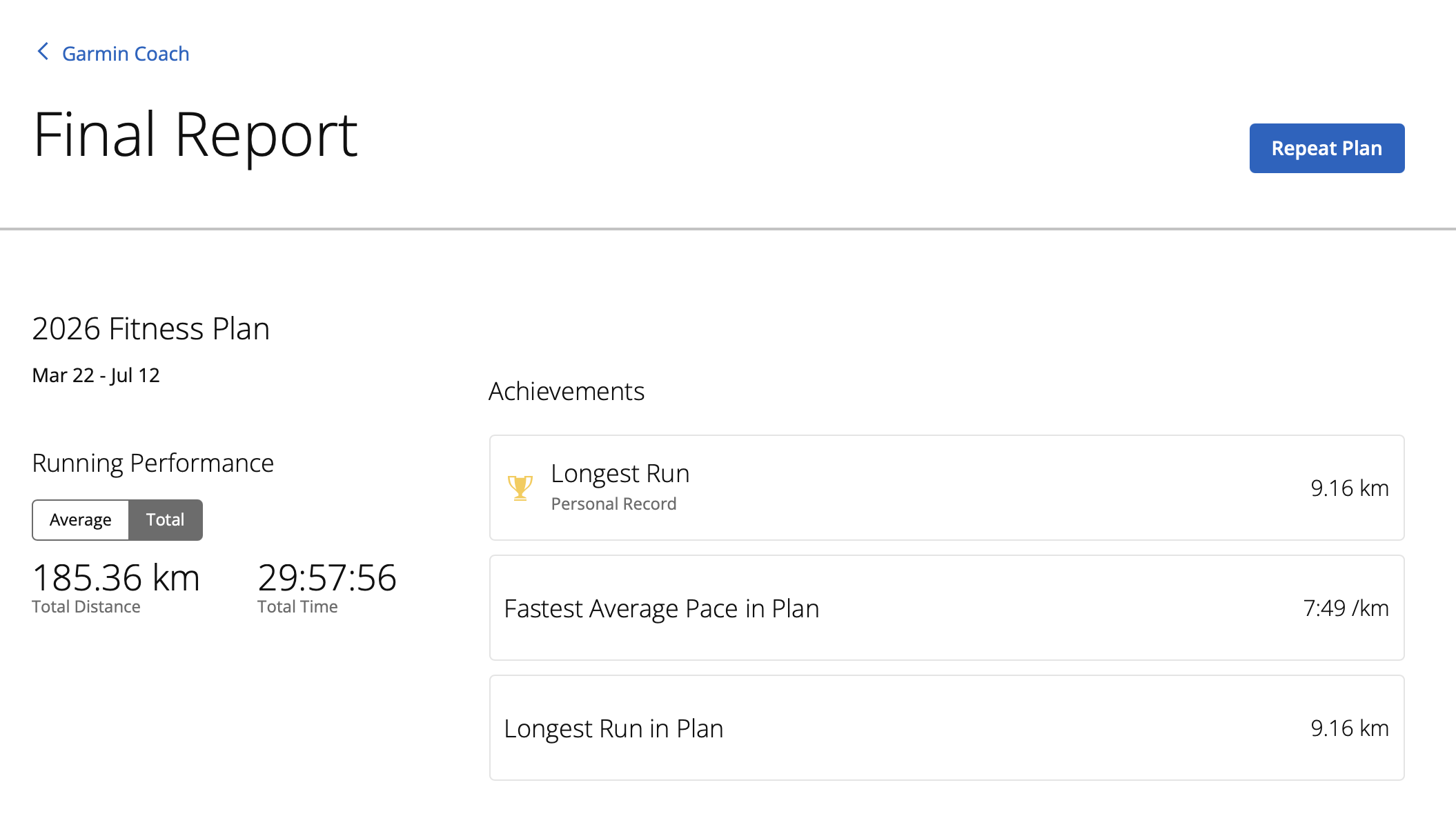
My final report from Garmin Coach
It Didn't Start With Running
Ironically, my running journey didn't begin with running at all. After being diagnosed with severe osteoporosis, my priority was rebuilding strength safely. I started attending the gym, using the eGym resistance-training machines at The King's School Sports Centre in Canterbury. Before each session, I'd spend around ten minutes cycling gently in Zone 2 to warm up before moving onto the strength machines. Running wasn't even part of the plan.
Then one day everything changed. A friend of mine who regularly competes in Ironman events wanted to compare the accuracy of my Garmin watch with the treadmill at the gym. He handed me a pair of running shoes and suggested I jog for a few minutes while we compared the distance recorded by both devices. To our surprise, my Garmin proved to be remarkably accurate. That short jog was probably the first time I'd worn proper running shoes in years.
A week later I decided to try a proper run on the treadmill. I managed about thirty minutes. Unfortunately, it triggered an intense headache that developed into something very close to a migraine. Looking back now, I don't think running was the problem. I simply wasn't ready for it. My aerobic fitness wasn't there yet, and my body wasn't conditioned to tolerate that level of effort.
For someone recovering from chronic fatigue, living with osteoporosis and dealing with recurrent migraines, it would have been very easy to conclude that running simply wasn't for me. Instead, it taught me something much more valuable. I didn't need to stop running. I needed to learn how to run.
Learning to Trust the Process
One of the biggest lessons Garmin Coach taught me wasn't how to run faster. It was how to pace myself. Almost every workout came with a heart-rate target, and rather than chasing the top end of each range, I deliberately stayed towards the bottom. If Garmin asked me to warm up around 137 bpm, I would gently build my effort instead of rushing there. If it prescribed a Threshold session between roughly 166 and 176 bpm, I'd usually sit around 166 to 170 bpm, only allowing my heart rate to climb briefly on hills before easing back down again.
That approach completely changed my confidence. For months, one of my biggest fears wasn't failing a workout. It was triggering another migraine. I noticed that harder sessions — particularly Threshold runs, VO₂ Max intervals and some of my longer runs — could occasionally leave me with headaches afterwards. Rather than abandoning the programme, I learned to respect my body's signals while still completing the workouts. Running became less about pushing hard and more about managing effort intelligently. (I wrote more about one of those specific decisions in Listening to My Body: Why I Changed My Garmin Workout.)
Recovery Became Part of My Training
Another small change made a surprisingly big difference. After watching one of Coach Parry's videos discussing running beyond the age of fifty, I started finishing every run with a ten-minute walk. It sounds almost too simple. Instead of stopping abruptly, I now deliberately plan my routes so I have a relaxed walk home after pressing the stop button on my watch. That short walk allows my breathing to settle, my heart rate to come down naturally and my legs to begin recovering before I get back home or sit down. Whether it's physiological or psychological, it genuinely seems to help. Sometimes the simplest ideas are the most effective.
Final Run
The final Garmin Coach session summed up the entire journey. Before I even started, my legs felt heavy. The previous day I'd spent around forty minutes teaching my daughter to ride her bike, jogging behind her while holding onto the saddle in the summer sunshine. It was much harder than I'd expected, and my calves were still complaining when I laced up my shoes this morning.
The first ten minutes weren't enjoyable. Everything felt stiff. Everything felt slow. But I trusted the process. Gradually my legs loosened. By the halfway point I felt comfortable again. Then, with around twenty minutes remaining, I noticed something I hadn't experienced before. I wasn't waiting for the run to end. In fact, I felt as though I could have carried on. For the first time since starting this programme, I finished because it was the planned distance — not because I had nothing left. That was probably the biggest victory of the day.
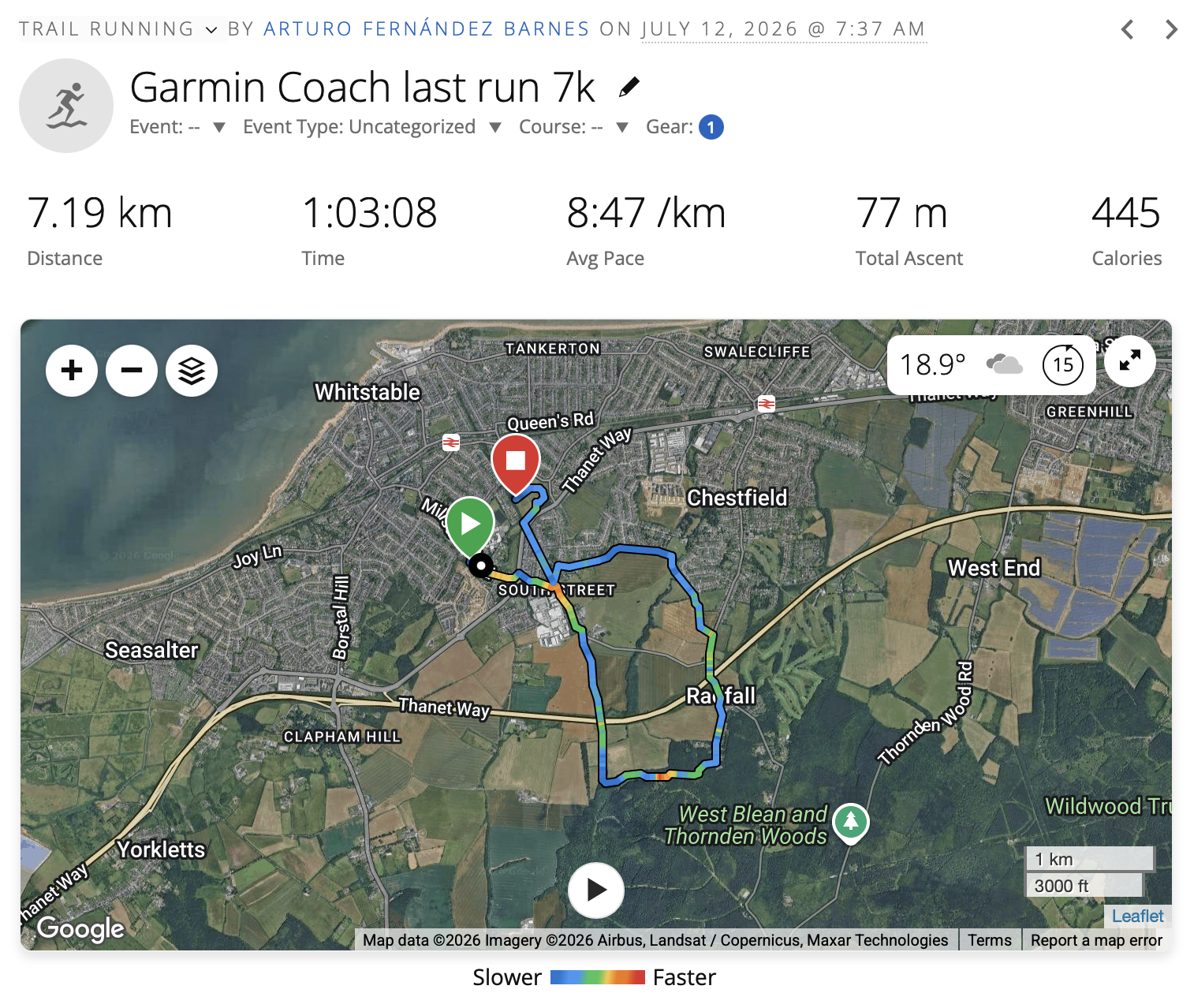
Garmin Coach last run 7k
Looking Beyond the Numbers
The statistics are encouraging. Over the course of the programme I completed all 17 weeks, ran more than 185 kilometres, spent almost 30 hours running, increased my VO₂ max from 34 to 38, improved my lactate threshold pace by almost a minute per kilometre, and maintained Garmin's Optimal training load for most of the programme. Those improvements matter. But they're only part of the story. The real achievement is that I learned consistency. I learned patience. I learned that listening to my body doesn't mean giving up. Sometimes it means slowing down just enough that you can keep moving forwards.
BonePilot Insight
One of the biggest lessons from these 17 weeks is that progress isn't built by perfect workouts — it's built by consistently creating the right conditions for your body to adapt. That's exactly the philosophy behind BonePilot: combining exercise, nutrition, recovery and bone health data to help you make informed decisions, rather than relying on any single metric.
Brooks Reached Their 90-Day Trial Too
There's another interesting coincidence. I bought my Brooks Ghost Trail shoes on 23 April, right at the beginning of this journey. This week, almost exactly ninety days later, both my Garmin Coach programme and Brooks' 90-Day Run Happy Promise came to an end. The shoes aren't going anywhere. I absolutely love them. They've been comfortable from the first run, given me excellent grip on woodland trails, and always felt stable underfoot — something that's particularly reassuring when you're living with osteoporosis.
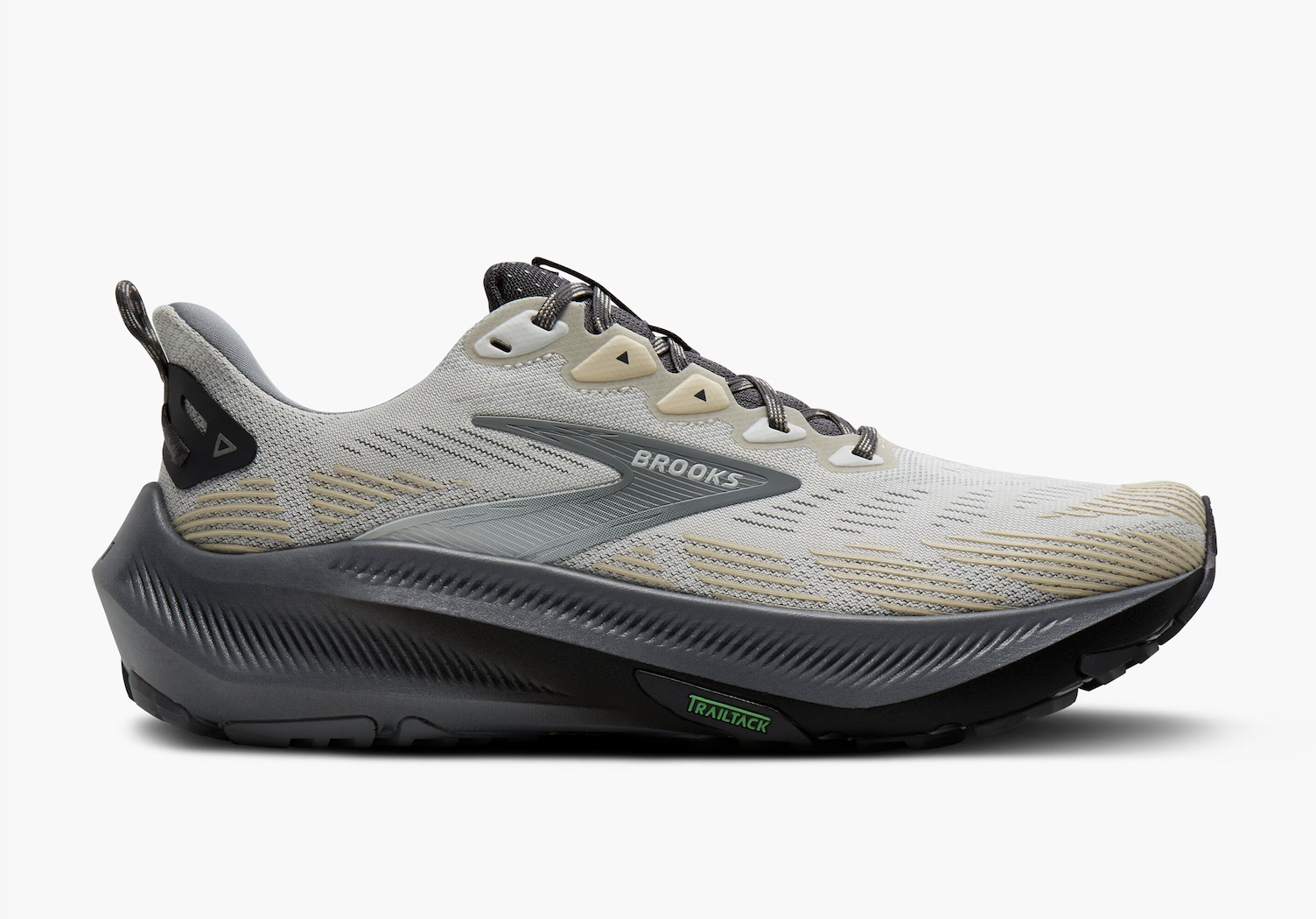
Brooks Ghost Trail
In fact, I enjoyed them so much that I've now added two more pairs to my running rotation: the Ghost 17 GTX for rainy days, and the new Ghost 18 for road running, treadmill sessions and gym training. I'm looking forward to seeing how they compare over the coming months. (I wrote more about how I chose them in Why I Chose Brooks Ghost Shoes for My Garmin Coach Journey.)

My Brooks Running Shoes Ghost Trail, Ghost 17 GTX and Ghost 18.png
Graduation, Not the Finish Line
When today's run finished, I assumed my Garmin Coach programme would simply disappear. Instead, Garmin had already planned next week's training. After looking more closely, I realised these weren't Coach sessions anymore. They were Daily Suggested Workouts. Throughout the last seventeen weeks, Garmin has quietly been learning my VO₂ max, lactate threshold, recovery patterns, HRV, sleep quality, training load and heart-rate responses. Now it feels as though I've graduated. The structured coaching has ended, but Garmin's adaptive guidance continues.
Rather than immediately starting another training plan, I'm planning to spend the next four to six weeks (or more) following these personalised Daily Suggested Workouts and seeing where they take me. After that? Perhaps another 5K. Perhaps a 10K. Maybe, one day, even a half marathon. Seventeen weeks ago I never imagined I'd be writing those words. Today, they feel entirely possible.
Practical Takeaways
Pace conservatively within prescribed heart-rate zones rather than chasing the top end.
Learn to distinguish between healthy training fatigue and warning signs your body is asking you to slow down.
A short walk to finish a run can aid recovery more than stopping abruptly.
Structured coaching plans can adapt around illness, migraines or bad days — use that flexibility rather than fighting it.
Consistency over months beats intensity in any single session.
Related Articles
Estimated reading time: 6 minutes
